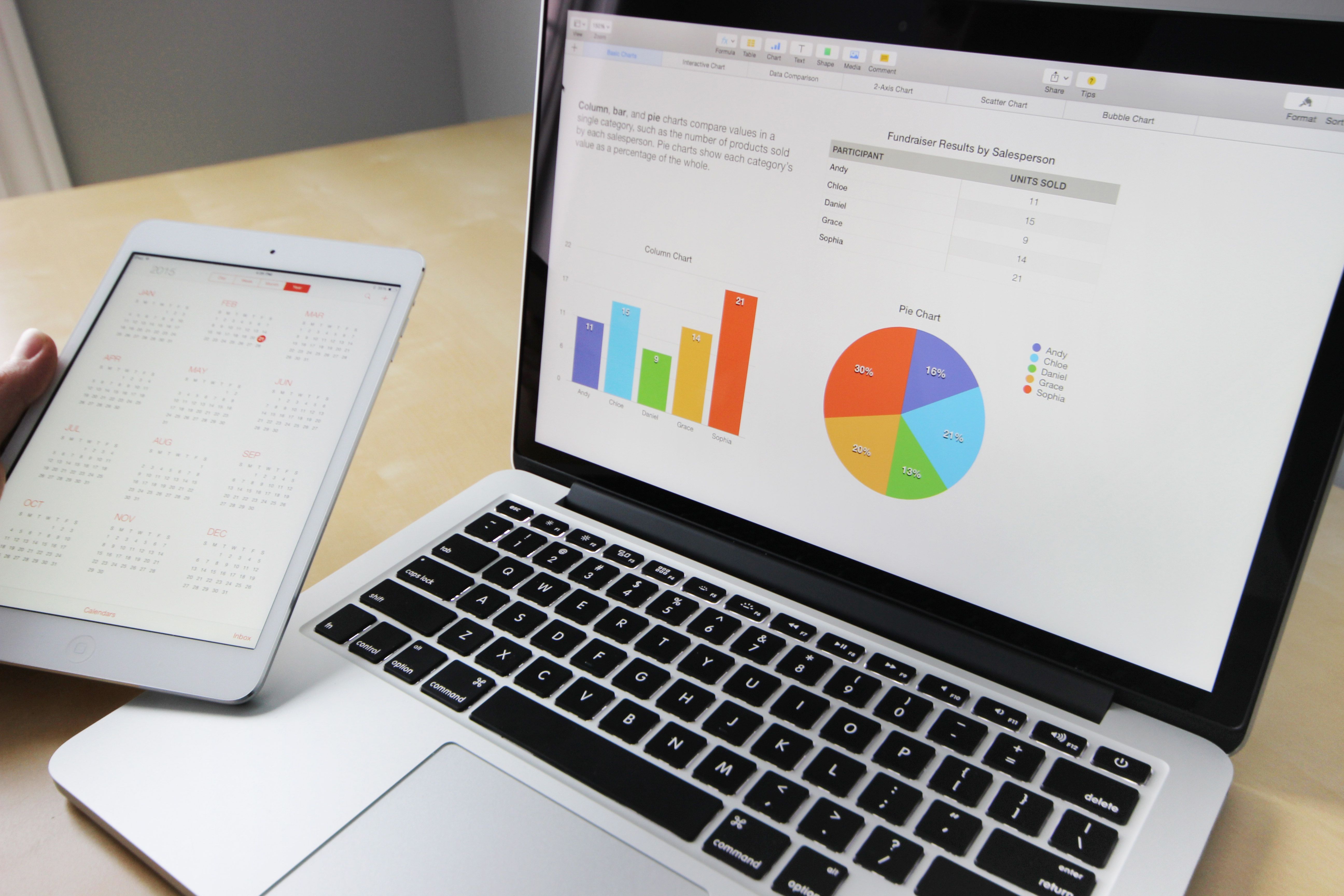
Still managing your business with Excel? Discover the 10 warning signs that your business has outgrown spreadsheets and why custom business software can improve productivity, reduce errors, and support growth.
10 Signs Your Business Has Outgrown Excel Spreadsheets
Microsoft Excel has been one of the world's most trusted business tools for decades. From budgeting and inventory tracking to customer lists and financial reporting, spreadsheets have helped businesses organise data quickly and affordably.
For startups and small businesses, Excel is often the perfect place to begin.
However, as a business grows, spreadsheets can become more of a limitation than a solution.
If your team is spending more time maintaining spreadsheets than making business decisions, it may be time to consider a more scalable approach.
In this article, we'll explore ten common signs that indicate your business has outgrown Excel—and how modern business software can help your organisation operate more efficiently.
Why Excel Eventually Becomes a Bottleneck
Excel was designed as a spreadsheet application, not a complete business management platform.
While it excels at calculations and reporting, it wasn't built to manage large teams, automate workflows, integrate multiple departments, or support complex business operations.
Many Australian businesses continue using spreadsheets simply because they're familiar. But as operations expand, the hidden costs of relying on manual processes begin to add up.
1. Your Team Is Entering the Same Data Multiple Times
One of the clearest signs you've outgrown Excel is duplicate data entry.
For example:
Sales records are entered into one spreadsheet. Finance manually copies them into another. Inventory is updated in a third spreadsheet. Management prepares reports from yet another version.
Each manual step increases the likelihood of mistakes and consumes valuable staff time.
With a centralised business system, information is entered once and shared automatically across departments.
2. Nobody Knows Which Spreadsheet Is the Latest Version
How often have you seen file names like these?
Sales Report Final.xlsx Sales Report Final v2.xlsx Sales Report Final NEW.xlsx Sales Report Final FINAL.xlsx
Version control becomes increasingly difficult as teams grow.
Employees may unknowingly update outdated files, resulting in inconsistent reporting and poor decision-making.
Modern business applications store information in a central database where everyone works from the same data in real time.
3. Reporting Takes Hours Instead of Minutes
Many businesses still spend days preparing monthly reports.
Employees collect spreadsheets from different departments, merge information, correct formatting issues, and manually verify figures.
This process is not only time-consuming but also vulnerable to human error.
Business dashboards can generate reports instantly, allowing managers to monitor sales, inventory, financial performance, and operational metrics without waiting for manual updates.
4. Human Errors Are Becoming More Frequent
A single misplaced decimal point or overwritten formula can have significant consequences.
Common spreadsheet mistakes include:
Incorrect formulas Deleted rows Broken references Duplicate records Typing errors
These issues can affect pricing, payroll, forecasting, inventory levels, and financial reporting.
Automated business systems minimise these risks by validating data and reducing manual input.
5. Your Business Processes Are Still Manual
If employees regularly perform repetitive administrative tasks, you're likely losing productivity.
Examples include:
Copying customer information Sending invoices manually Updating inventory by hand Processing approvals via email Tracking leave requests in spreadsheets
Business automation can streamline these activities, reducing repetitive work and allowing employees to focus on more valuable tasks.
6. Departments Operate in Isolation
As businesses grow, different departments often create their own spreadsheets.
Sales maintains one version of customer data.
Finance maintains another.
Operations tracks inventory separately.
Customer service records support requests elsewhere.
This fragmented approach creates data silos and limits visibility across the organisation.
Integrated software connects departments so everyone has access to consistent, up-to-date information.
7. Collaboration Is Becoming Increasingly Difficult
Modern businesses rely on collaboration across teams and locations.
However, spreadsheets can make this challenging when:
Multiple users edit simultaneously Files are emailed back and forth Employees accidentally overwrite each other's work Remote teams struggle to access updated files
Cloud-based business applications provide controlled access, real-time updates, and audit trails that make collaboration more efficient.
8. Security Has Become a Concern
Business data is one of your organisation's most valuable assets.
Unfortunately, spreadsheets often contain sensitive information such as:
Customer records Financial data Employee salaries Supplier contracts Business forecasts
Password-protecting an Excel file offers only limited protection.
Dedicated business software includes features such as:
User permissions Role-based access Activity logs Secure authentication Encrypted data storage
These capabilities help businesses better protect sensitive information.
9. Your Customers Are Expecting Faster Service
Today's customers expect quick responses and accurate information.
When employees must search through multiple spreadsheets to answer simple questions, customer service suffers.
Imagine receiving questions like:
Where is my order? Has my invoice been paid? Is this product in stock? When is my appointment?
With integrated software, staff can retrieve this information quickly, helping deliver a more responsive customer experience.
10. Your Business Is Growing Faster Than Your Systems
Growth is exciting—but it also places greater demands on your processes.
More customers, employees, suppliers, and transactions mean more data to manage.
Eventually, spreadsheets become difficult to maintain, increasing the risk of errors and slowing down daily operations.
A scalable business management system grows alongside your organisation, helping you maintain efficiency as your business expands.
The Hidden Costs of Staying with Excel
Many businesses continue using spreadsheets because they appear inexpensive.
However, the real costs often include:
Hours spent on manual data entry Reporting delays Costly human errors Reduced productivity Poor collaboration Duplicate work Limited visibility Slower customer service Missed business opportunities
When these hidden costs are considered, investing in the right software can deliver significant long-term value.
What Should You Use Instead?
The best solution depends on your business needs.
Some organisations benefit from commercial software platforms.
Others require custom-built systems tailored to their unique workflows.
Custom software can include features such as:
Customer Relationship Management (CRM) Enterprise Resource Planning (ERP) Inventory Management Project Management Employee Portals Customer Portals Automated Reporting Workflow Automation Mobile Applications API Integrations
The advantage of custom software is that it supports the way your business already operates, rather than forcing you to adapt to generic processes.
How GO TECH NUSANTARA Can Help
At GO TECH NUSANTARA, we help businesses move beyond spreadsheets by developing secure, scalable, and user-friendly software solutions.
Whether you're looking to automate repetitive tasks, improve reporting, integrate departments, or build a custom web or mobile application, our team works closely with you to understand your goals and design technology that supports long-term growth.
Our services include:
Custom Software Development Web Application Development Mobile App Development Business Process Automation API Integration System Modernisation Ongoing Maintenance and Support Final Thoughts
Excel remains an excellent tool for calculations, analysis, and small-scale data management. However, when spreadsheets become central to managing every aspect of your business, they can create inefficiencies that limit growth.
If your organisation is experiencing duplicate data entry, reporting delays, collaboration issues, or increasing manual work, it may be time to evaluate a more integrated solution.
Modern business software isn't just about replacing spreadsheets—it's about creating a more efficient, accurate, and scalable way of working.
Ready to Modernise Your Business?
If you're ready to reduce manual work, improve operational efficiency, and build systems that grow with your business, GO TECH NUSANTARA can help.
Contact our team today to discuss how custom software and business automation can support your organisation's next stage of growth.
Have a project in mind?
Let's talk about how this applies to your team.